NOTE: Click the video above to watch the feature!
The ACC absolutely loaded up on talent through the transfer portal this offseason — and suddenly the conference looks deeper, stronger, and more dangerous heading into next year. Some programs built legitimate national title contenders. Others assembled dangerous tournament teams. But which programs actually nailed the portal process?
Here's my definitive ranking of the top five ACC transfer portal winners so far this cycle.
1. Louisville Cardinals — The Best Class in the ACC (And Maybe the Country)
Louisville didn't just add talent — they added elite talent. Their six-man class is being praised by most recruiting analysts as one of the best in the entire country, and it's easy to see why.
Flory Bidunga is the cornerstone. An explosive, elite defensive anchor who posted a 9% block rate on the season — climbing to 10% in conference play — with a 5.1 defensive box plus/minus on Torvik. What makes him truly rare is his perimeter mobility; he can guard guards and win those matchups outright, not just survive them. On offense, he's a dynamic lob threat and vertical spacer who pressures the defense just by being on the floor.
Pair Bidunga with Jackson Shelstad and you have a top-two combo that is genuinely special. Shelstad was 93rd percentile in pick-and-roll ball-handling efficiency in the 2024–25 season while carrying an 84th percentile usage rate — numbers that don't usually coexist. He's a three-level scorer, but his pull-up shooting off the dribble is his deadliest weapon: 53.3% on off-the-dribble threes in pick-and-roll situations, on real volume.
Deshayne Montgomery slots in as the perfect third or fourth option — a 6'4" Swiss Army knife who shot 38% from three, tallied 36 dunks, and brings strong perimeter defense. Álvaro Folgueiras provides essential floor spacing at 6'10", giving Bidunga the room he needs to operate at the rim.
Then Louisville added two high-upside wildcards. Karter Knox (out of Arkansas) is a former elite prep recruit flashing 38% three-point shooting and elite athleticism, with a ceiling that could push Louisville from Final Four hopeful to Final Four favorite. And Gabe Dynes out of USC — a 7'3"/7'4" rim finisher with 29 dunks in limited minutes — is a low-risk, high-upside depth piece that could be a game-changer if he develops.
Factor in Louisville's elite prep recruiting, and this isn't a close call: they are the undisputed #1 portal class in the ACC.
2. Miami Hurricanes — Built With Surgical Intentionality
While Louisville stacked talent, Miami built with precision. Rather than collecting players, they identified specific pieces early and constructed a roster around fit and synergy — and the result is exceptional.
It starts with Somto Cyril, a 6'10"/6'11" elite athlete who serves as both an offensive focal point and defensive anchor. His numbers are staggering: 79 dunks on the year, 76% at the rim, 71 blocks, and 178 rebounds. He is a perfect lob threat and a defensive centerpiece — exactly the kind of player you build a program around.
The other half of Miami's core is Acaden Lewis, the 6'2" guard who transferred from Villanova after a phenomenal freshman season. He logged 173 assists against just 70 turnovers and is one of the premier pick-and-roll passers available in this portal cycle. Lewis shot 40% on catch-and-shoot looks and finished at 61% at the rim, ranking in the 78th percentile nationally in basket finishing. The pairing with Cyril could be the best pick-and-roll combination in the entire ACC.
To protect that duo, Miami added:
Desean Goode (Robert Morris) — literally a 100th percentile offensive efficiency player who shot over 55% from three on two-plus attempts per game
Nick Dorn (Indiana) — a 6'7" wing who drained 37–38% from three on 160 attempts, preventing defenses from ever sagging off in those pick-and-roll actions
The intentionality here is what sets Miami apart. They didn't just sign players — they engineered a roster. Goode and Dorn in opposite corners while Lewis and Cyril operate in the pick-and-roll is a lineup that is going to give ACC defenses nightmares.
3. Duke Blue Devils — Proving Volume Isn't Everything
Duke took a completely different approach: two additions, zero wasted picks.
Rather than rebuilding, John Scheyer identified exactly what his roster needed to complement elite returning talent and a top prep class — and then went and got it.
John Blackwell (Wisconsin) is one of the top-rated guards in the entire transfer portal by every major recruiting service. His shooting profile is elite: 40% from three overall, 44% on catch-and-shoot, and an absurd 66% on unguarded threes. But he's more than a shooter — he finished at 51% at the rim on a heavy volume of attempts and can attack closeouts and get downhill. Crucially, you don't need the ball in his hands to get value from him, which is perfect for a team that already has star-caliber talent.
Drew Scharnowski (Belmont) is the perfect complementary big. Not a floor spacer — he took five threes all year — but an absolute force around the rim. His numbers: 167 rim attempts, 115 makes (70%), in the 95th percentile nationally in rim volume. He was also in the 93rd percentile in cutting frequency, meaning his movement and off-ball activity fit Scheyer's system to perfection. He demands no touches, cleans up garbage, and wins games in March.
This is a masterclass in targeted portal use. A class of two can be just as impactful as a class of six when you're filling precise holes around an already loaded roster. Duke is a legitimate national title contender.
4. NC State Wolfpack — Elite Efficiency, Built From the Ground Up
NC State had an enormous rebuilding job ahead of them — at one point, only Mikey Wilkins was confirmed returning. But Justin Ganey built something really interesting: a roster constructed around elite offensive spacing, dynamic guard play, and complementary rim protection.
The engine of it all is Preston Edmead (Hofstra). The freshman scored 20 points against Alabama in the NCAA Tournament and posted nearly 40% shooting on pull-up threes — on 154 attempts. Those aren't fluky numbers. He also totaled 150 assists against just 77 turnovers. Shooting off the bounce at that clip is one of the most translatable skills in college basketball, and Edmead is elite at it.
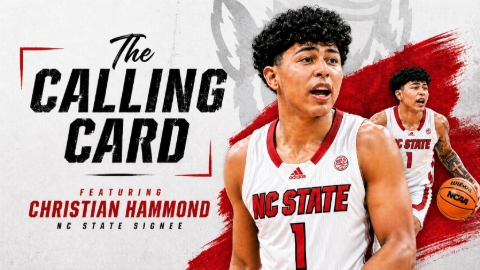
Christian Hammond (UC Santa Barbara) slots in alongside him as another dangerous shooter — 39.6% from three, 50% on unguarded looks, and a floater game ranked in the 100th percentile in frequency and 85th in efficiency. Together, Hammond, Edmead, and returning piece Paul McNeil form a three-man shooting lineup that will be nearly impossible to guard.
Protecting the paint behind them is Kyle Evans (UC Irvine), who led the entire nation in blocks last season with 111. His block rate of 11.6% rose to 17% against top-100 competition — meaning he actually gets better against better competition. The guards can pressure and gamble knowing Evans is cleaning up behind them.
Eemeli Yalaho (Washington State) completes the frontcourt as a 6'8" floor-spacing power forward — 39% on catch-and-shoot looks (43% unguarded) on 124 attempts — who preserves spacing without needing the ball.
Then there are the upside pieces: Darius Adams (Maryland), a former McDonald's All-American who was arguably miscast in a high-usage role, and RJ Keene (Boise State), a 6'7" glue guy who is a veteran winning culture builder. Both raise the ceiling substantially.
NC State built the right way for this moment. Smart, intentional, and deep.
5. UNC Tar Heels — Enormous Upside, Real Risk
UNC's portal class is the most fascinating — and most polarizing — in the ACC. The strategy was clear: prioritize talent and projection over established production, and trust that better surroundings and development will unlock that potential.
Neoklis Avdalas (Virginia Tech) is the embodiment of this philosophy. A 6'9" big who operated as a 92nd percentile pick-and-roll ball handler nationally — as a center. The efficiency wasn't always there at Virginia Tech, but the film flashes suggest a player who may be a top-10 talent in all of college basketball by raw ability. If that efficiency stabilizes with better coaching and better teammates, Avdalas could be the breakout star of the 2025–26 season.
Matt Able (NC State) fits a similar mold — a 6'5" shooting guard with real upside. He posted 46% on unguarded threes last season and showed untapped athleticism and explosiveness. The shooting splits between guarded and unguarded looks need to stabilize, but the tools are there for a lottery-pick trajectory.
Terrence Brown (Utah) is probably UNC's safest addition — a 97th percentile pick-and-roll ball handler who is a crafty downhill creator. Shooting concerns (32% from three on low volume, with some puzzling unguarded splits) are real, but he gives UNC an offensive organizer and a real ball-handler to pair with Avdalas in creative sets.
Maxim Logue (Florida Atlantic) rounds out the class as a 6'9"/6'10" explosive athlete — big wingspan, elite vertical, 26 dunks and 15 blocks in limited minutes — who profiles as a dangerous lob/dunker-spot finisher whose defensive impact should scale with bigger minutes.
The honest truth: UNC's class could look like a stroke of genius by March, or it could be the one that doesn't pan out. The upside is enormous. The risk is real. Only time will tell — but the talent is undeniable.
Final Thoughts
The ACC transfer portal cycle has been exceptional for the conference. Louisville and Miami built powerhouses. Duke added surgical precision to an already elite foundation. NC State constructed a smart, efficient roster from scratch. And UNC swung for the fences on talent and projection.
Things aren't done yet — more moves could change these rankings. But as the biggest names come off the board, one thing is clear: the ACC is going to be very, very good next year.
NOTE: Click the video above to watch the feature!